
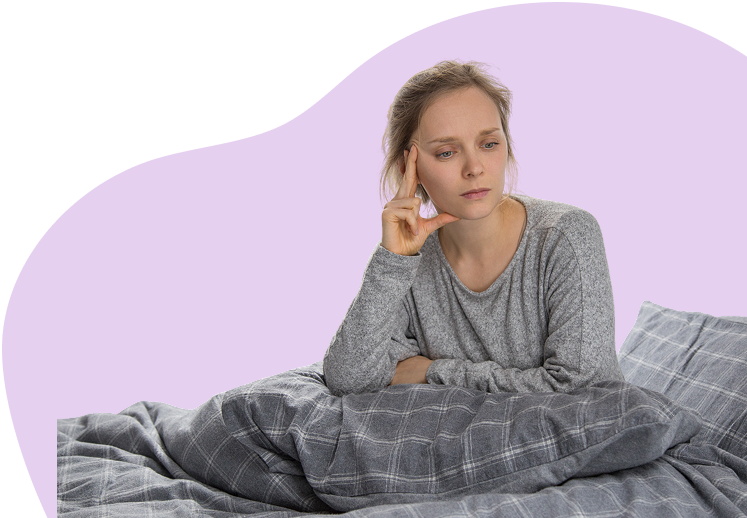
If your ovulation date seems later than expected, you may wonder whether stress or a few nights of poor sleep could be responsible.
Stress can affect the hormonal processes involved in ovulation, and significant or ongoing stress may contribute to changes in your menstrual cycle. Poor sleep can also affect your overall health and may occur alongside stress, but it is not possible to say that a particular night of poor sleep will delay ovulation.
If ovulation happens later than usual, your next period may also arrive later. Understanding your cycle can help you recognise changes, but calendar predictions cannot confirm exactly when you ovulate.
How can stress affect ovulation?
Ovulation depends on communication between the brain and the ovaries through reproductive hormones. Significant physical or emotional stress can affect the systems involved in regulating these hormones.
When this hormonal signaling is disrupted, ovulation may occur later than expected or may not occur during a particular cycle. If ovulation is delayed, the period that usually follows it may also be delayed.
Stress affects people differently. A demanding week does not automatically mean you will miss ovulation, and a late period alone cannot prove that stress is the cause.
Other factors, including illness, changes in nutrition, intense exercise and certain medical conditions, may also affect menstrual timing.
Can poor sleep delay ovulation?
Sleep is important for general health, mood and the body's normal functioning. Poor sleep may happen during stressful periods, and ongoing sleep problems can make it harder to maintain a healthy routine.
However, the relationship between sleep and ovulation is complex. It would be misleading to claim that a specific number of hours of sleep will guarantee ovulation on a particular day.
If you have been sleeping poorly, focus on improving your routine where possible. Do not blame yourself if your cycle changes, and do not assume sleep is the only explanation.
Signs that ovulation may be approaching
Some people notice changes around ovulation, although these signs are not exact confirmation.
Changes in cervical mucus
Cervical mucus may become clearer, wetter and more slippery around the fertile window. Some people describe it as similar to raw egg white.
Changes in cycle timing
Tracking the first day of each period can help you understand your usual cycle length. If your cycles vary, a calendar-based estimate may be less reliable.
Ovulation predictor tests
Ovulation tests detect a rise in luteinizing hormone (LH), which usually occurs before ovulation. A positive result suggests ovulation may be approaching, but it does not guarantee that an egg will be released.
Basal body temperature
Some people track their temperature each morning. A sustained rise can help identify a pattern after ovulation has occurred, but it is less useful for predicting the exact day in advance.
No single tracking method is perfect. Combining cycle history with other signs may provide more context than relying on a calendar alone.
If you want a calendar-based estimate, try our Ovulation Calculator . Enter your cycle information to estimate your ovulation date and fertile window. Keep in mind that the result is an estimate, not confirmation that ovulation has occurred.
What can you do if stress or poor sleep is affecting your routine?
You do not need to achieve a perfect lifestyle to support your menstrual health. Start with manageable changes.
- Keep a consistent sleep routine: Try to go to bed and wake up at similar times.
- Make time to unwind: Gentle movement, breathing exercises or a relaxing activity may help you manage stress.
- Eat regularly: Avoid restrictive diets or skipping meals, particularly during demanding periods.
- Avoid overtraining: If you exercise intensely, allow time for rest and recovery.
- Track your cycle: Record period dates and any noticeable changes, without treating predicted ovulation dates as certain.
If you are trying to conceive, having sex every two to three days throughout your cycle can help reduce the pressure of predicting the exact day of ovulation.
When should you seek medical advice?
Speak with a healthcare professional if your periods become persistently irregular, stop unexpectedly or you have concerns about ovulation or fertility.
It is particularly important to seek advice if you have gone several months without a period, experience significant weight changes, or have other symptoms that concern you. If pregnancy is possible, take a pregnancy test when appropriate.
A healthcare professional can review your menstrual history, symptoms, medicines and other possible causes. Do not assume that stress or sleep is responsible without considering the wider picture.
For more information about menstrual cycles and reproductive health, explore our Health Library .
Frequently asked questions
सामान्य प्रश्नों के त्वरित उत्तर।
Can stress delay ovulation by a week?
It can affect cycle timing, but there is no fixed number of days by which stress will delay ovulation. The effect varies between people and cycles.
Can one night of poor sleep delay ovulation?
One night of poor sleep does not automatically delay ovulation. Ongoing sleep disruption may be part of a wider pattern affecting your health, but an individual cycle cannot be predicted from one night's sleep.
If ovulation is delayed, will my period be late?
Often, a later ovulation date means the next period will also arrive later. However, cycle changes can have different causes, and a late period does not confirm that ovulation was delayed.
Can I still get pregnant if I ovulate later than usual?
Yes. If ovulation occurs later, pregnancy may still be possible during the fertile window around that ovulation. Calendar-based predictions may be less accurate when your cycle timing changes.