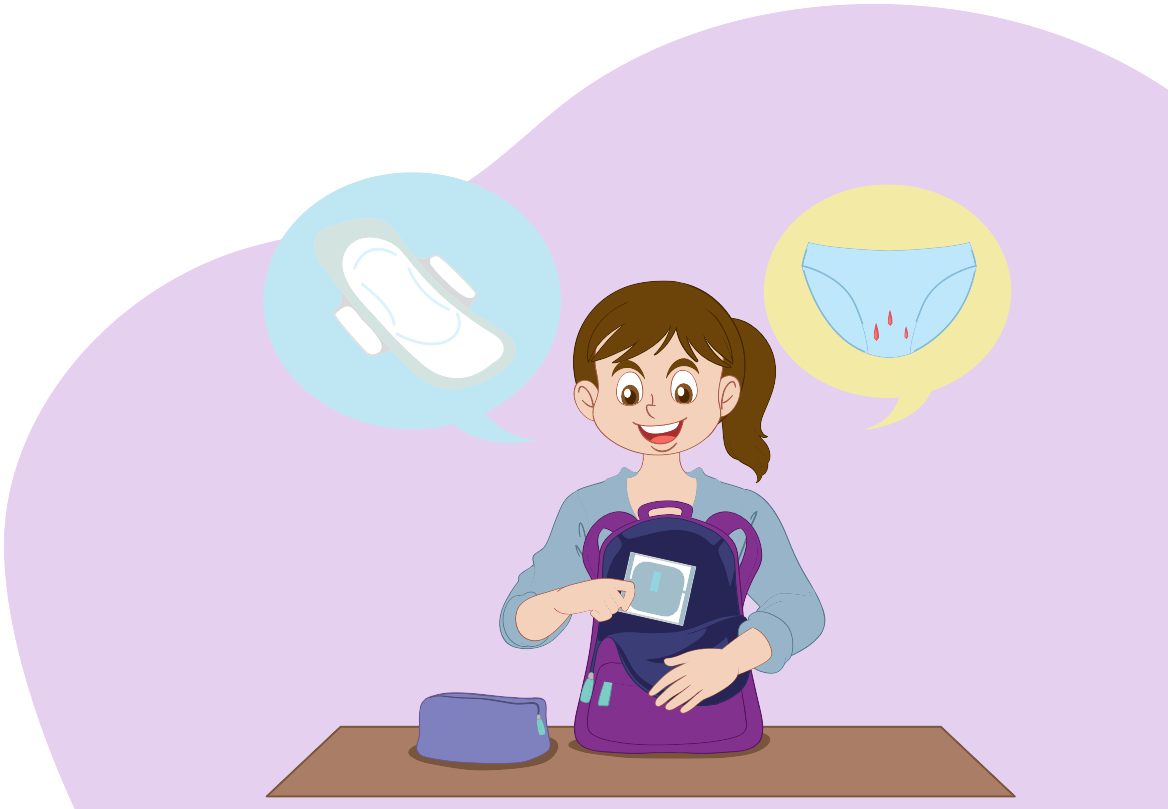
Having supplies ready before a first period arrives removes a significant source of stress for many girls, since menarche frequently occurs without warning during a school day (Chandra-Mouli & Patel, 2017). A small, discreet kit kept in a backpack addresses the most common scenario directly.
What to Keep in a School Period Kit
A few individually wrapped pads, ideally with wings for better positioning inside underwear, form the core of a school kit. A spare pair of underwear allows for a full change if leakage occurs before a pad can be applied. A small opaque bag or pouch, sometimes called a period pouch, keeps these items private and separate from books or electronics. A plastic sandwich bag serves a second purpose: sealing away soiled underwear or a used pad for later disposal at home. Wet wipes are worth including as well, since bathroom sinks are not always accessible from a toilet stall. A stain-removal pen or a small bar of soap can help address minor spotting on clothing, though most stains set less if rinsed with cold water rather than warm.
Building a Home Supply Station
At home, a designated drawer or basket in the bathroom, stocked with a range of pad sizes and absorbencies, works better than storing supplies alongside other toiletries where they may be overlooked in a moment of urgency. Overnight pads, which are longer and more absorbent, address heavier flow during sleep and should be included even before they become necessary, since flow volume can increase unpredictably during the first year of menstruation. A basic heating pad or hot water bottle addresses cramping when it occurs, and over-the-counter pain relief such as ibuprofen, used according to age-appropriate dosing guidelines, can be kept on hand after a conversation with a pediatrician or pharmacist.
Considering Tampons and Alternatives
Tampons are generally introduced later than pads, once a girl feels physically ready and has had some practice with her anatomy through pad use. Menstrual cups and period underwear exist as alternatives as well, though most girls start with pads due to the lower learning curve involved. A first period kit does not need to include every product type; a smaller, familiar set of options tends to reduce anxiety more effectively than an overwhelming array of choices.
Discretion Without Secrecy
Packaging pads in a plain pouch rather than their original branded wrapper can ease self-consciousness for girls who feel uncomfortable being seen carrying period products at school. This is a matter of personal comfort rather than necessity, since menstruation is a typical biological process rather than something requiring concealment.
Frequently Asked Questions
Quick answers to common questions.
What is the single most important item to keep at school?
A few individually wrapped pads address the most likely scenario, an unexpected first period during school hours, more directly than any other single item.
Should tampons be included in a first period kit?
Tampons are usually optional at this stage, since most girls begin with pads and introduce tampons later, once comfortable with their bodies.
How often should home supplies be restocked?
Checking supply levels once a month, ideally around the expected time of a period once cycles become more predictable, helps avoid running short unexpectedly.
Track It in the App
Keeping a small period kit nearby can make an unexpected period easier to manage.