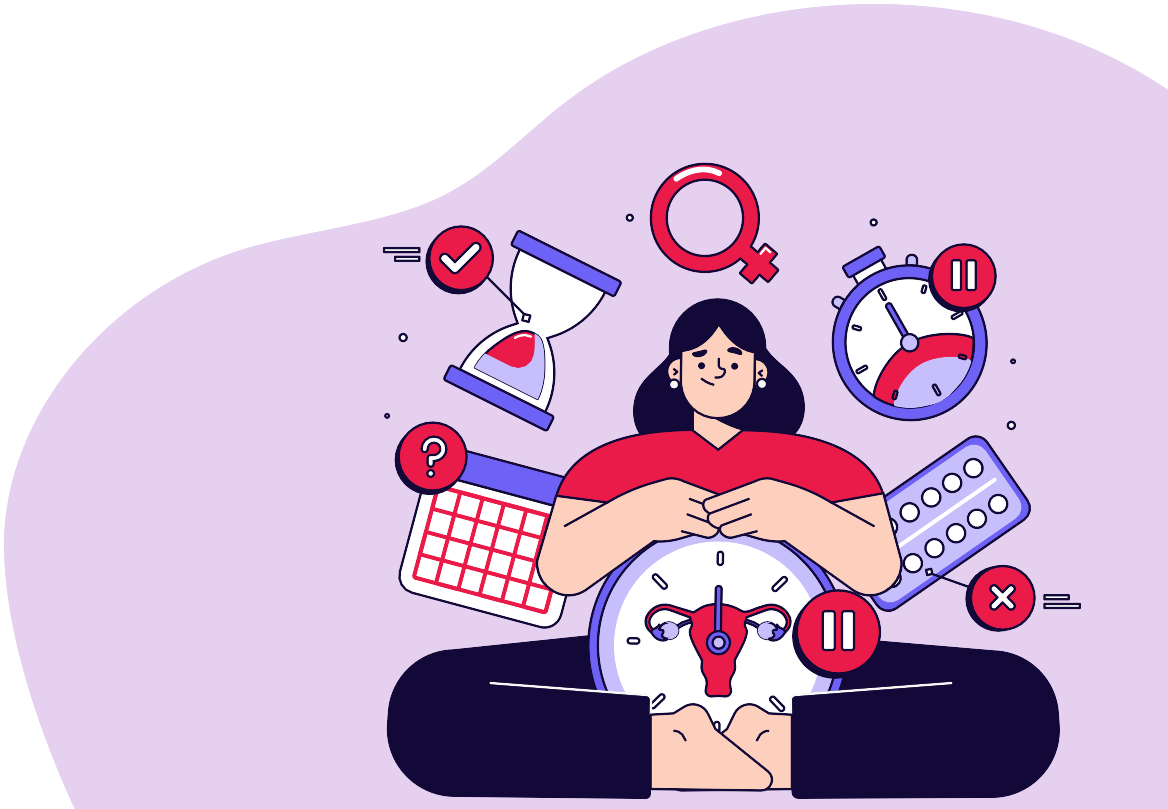
What Does Hormonal Imbalance Mean?
“Hormonal imbalance” is a broad phrase rather than a single diagnosis. Hormones naturally rise and fall throughout the menstrual cycle, and changes can happen during puberty, pregnancy, breastfeeding, perimenopause and other life stages.
Symptoms such as irregular periods, acne, changes in hair growth, unexpected weight changes or mood changes can have many possible causes. They do not automatically prove that your hormones are “out of balance.”
The useful question is not simply whether you have a symptom, but whether several symptoms form a pattern that needs assessment.
Menstrual Signs
Changes in your period can sometimes provide clues about hormone-related conditions. These include periods becoming unusually irregular, very heavy, very light or absent.
Ovulation can also become less predictable. If you are trying to conceive, irregular ovulation can make fertile days harder to identify.
However, menstrual changes can also happen for non-hormonal reasons, including stress, changes in weight, exercise, contraception and pregnancy.
Other Symptoms People Notice
Some people associate hormonal changes with acne, increased facial or body hair, scalp hair thinning, breast tenderness, hot flushes, sleep changes or mood symptoms.
Conditions such as PCOS, thyroid disorders and perimenopause can cause combinations of these symptoms. Other health conditions can cause similar changes too.
That is why symptoms should be considered together with your age, cycle history, medications, contraception and overall health rather than used to self-diagnose.
How Hormone Problems Are Investigated
A healthcare professional may ask about your menstrual history and symptoms and may consider pregnancy testing or blood tests when appropriate. The tests depend on the suspected cause.
Not everyone with an irregular period needs a large hormone panel. Testing should be guided by symptoms and clinical assessment.
Keep a record of cycle dates and symptoms before an appointment. A clear timeline can make it easier to explain what has changed.
When to Get Help
Seek medical advice if your periods repeatedly stop, become very irregular, become unusually heavy or are associated with significant pain. It is also worth getting checked if you have new facial hair growth, persistent acne, unexplained weight changes or difficulty becoming pregnant.
An ovulation app can help you record these changes, but it cannot diagnose a hormone disorder. Use your tracking history as information to discuss with a healthcare professional.
Frequently Asked Questions
Quick answers to common questions.
What are common signs of hormonal changes?
Changes in periods, ovulation, acne, hair growth, sleep, mood and body temperature can occur with hormonal changes, but these symptoms have many possible causes.
Can irregular periods mean a hormone problem?
They can, but irregular periods can also result from stress, weight changes, exercise, contraception, puberty or perimenopause.
Can an app detect a hormonal imbalance?
No. An app can identify patterns in the data you enter, but it cannot diagnose a hormonal condition.
When should I see a doctor about hormone symptoms?
Seek advice when symptoms are persistent, severe, changing your usual cycle or affecting fertility or daily life.
Why Symptoms Need Context
Many symptoms described online as signs of “hormonal imbalance” are common and can occur for many different reasons. Tiredness, acne, weight changes, mood changes and irregular periods can be caused by sleep problems, stress, medications, life-stage changes, thyroid conditions, PCOS and other health issues.
That is why a symptom checklist should not be used as a diagnosis. A clinician will usually consider the timing of symptoms, your menstrual pattern, medications, contraception, health history and whether several symptoms occur together.
Your cycle tracker can make this process easier. Record symptoms consistently and note when they occur in relation to your period. A pattern that appears repeatedly may be more useful than a symptom that occurs once.
If you are trying to conceive, mention any changes in cycle length or suspected ovulation to your healthcare professional. Irregular ovulation can affect fertility, but the underlying cause matters.
Avoid “hormone balancing” products that promise to correct your hormones without identifying a medical cause. Supplements and herbal products can have side effects and interactions.
Track It in the App
Symptoms can have many causes. Use cycle tracking to document patterns, then seek professional assessment rather than self-diagnosing.